
On Third Places, and Oregon Station


When people ask what Oregon Station is, the most accurate answer is also the simplest:
It’s a third place.
The term comes from urban sociology, but its meaning is immediately recognizable. A third place is neither home nor work, yet it occupies a role just as essential. It is where people gather without obligation, where conversations unfold naturally, where time loosens its grip. Third places are not defined by events or programming alone, but by atmosphere - by whether a space feels intuitive, familiar, and worth returning to.
The most enduring examples rarely announce themselves. They integrate quietly into daily life, becoming part of a community’s rhythm rather than a destination that must be explained.
This is the lineage Oregon Station belongs to.
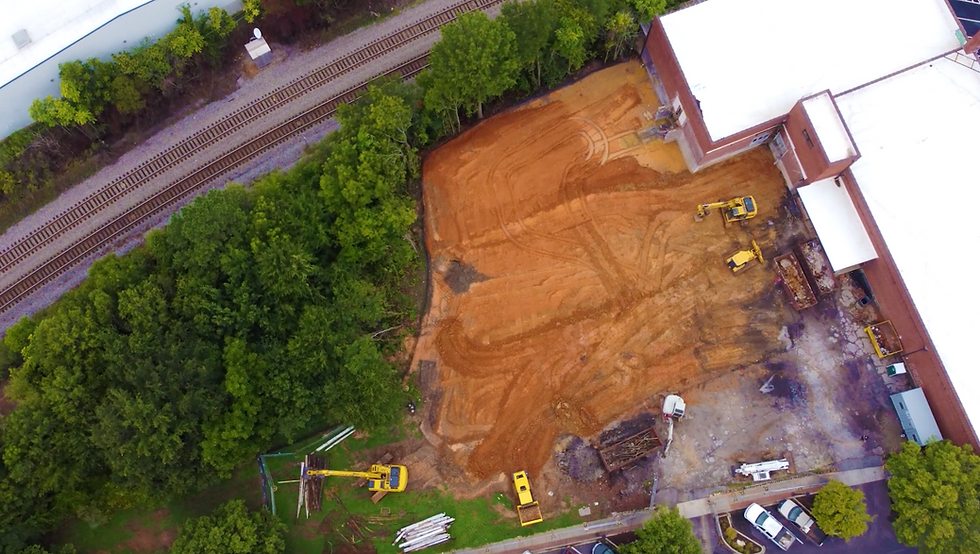
Long before construction began, attention was paid to how people move through spaces like these - where they slow down, where they pause, what feels welcoming without instruction. Thresholds and transitions were studied alongside sightlines and circulation, as was the way light settles into a space as the afternoon wears on. These are not decorative considerations. They are the mechanics of how people decide, often unconsciously, whether to stay.
Greenwood Development brings a long history in hospitality to this work. Hospitality, at its best, is not performative. It is disciplined. It understands how experience is shaped through proportion, sequence, and restraint. The goal is not spectacle, but comfort that feels effortless and places that hold their relevance over time.
That same discipline extends beyond architecture and into tenant curation.
Oregon Station is being shaped with a clear understanding of what works, what doesn’t, and, just as importantly, what this town has been quietly asking for. Tenant selection here is deliberate, informed by years of observing how people actually use space, which combinations thrive, and where balance matters more than trend. It reflects an understanding of how Greenwood actually moves - when streets are busiest, when they soften, and where people naturally gather when given the opportunity.
The intent is not homogeneity, nor is it novelty for its own sake. It is a mix that is complementary yet broad in its appeal, a cohesive setting that welcomes people from different walks of life without feeling fragmented. A true meeting place, where overlap is natural and variety feels coherent rather than chaotic.
In this sense, Oregon Station is not being assembled so much as composed.
It is designed to feel intuitive on arrival and familiar over time. A place that supports daily rhythms as easily as special moments, accommodating both movement and pause without privileging one over the other.
In time, Oregon Station will be known less for any single feature and more for the role it plays - anchoring activity, supporting connection, and offering continuity. The places that last are rarely the loudest ones. They are the ones people return to without thinking, until they can’t imagine the city without them.


Comments